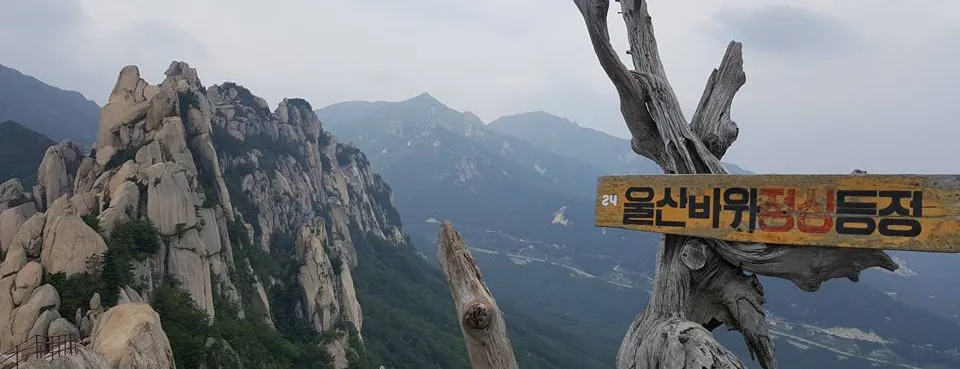
 The marker at the top of Ulsanbawi Rock. You only get here after the steel staircase. ©Marcella Astrid · CC BY-SA 3.0The marker at the top of Ulsanbawi Rock. You only get here after the steel staircase. ©Marcella Astrid · CC BY-SA 3.0
Seoraksan › Ulsanbawi Rock Trail (Seoraksan National Park)
Ulsanbawi Rock is the granite mass that stands above the Sogongwon park entrance in Outer Seorak, and the Ulsanbawi Rock trail is the short walk up to the top of it. It is a completely separate objective from Daecheongbong, the summit of Seoraksan, and it is much shorter and easy for most of its length. The path runs past Sinheungsa Temple and Heundeulbawi, the Rocking Rock, on a gentle line, and then the final section climbs a steep steel staircase onto the rock itself. From the top you look down over Sokcho and the East Sea.
Last checked 2026-08-06 · Korea National Park Service: Seoraksan National Park official fee, entry-time and closure information (checked July 2026), plus Korea Forest Service open data on the 100 famous mountains
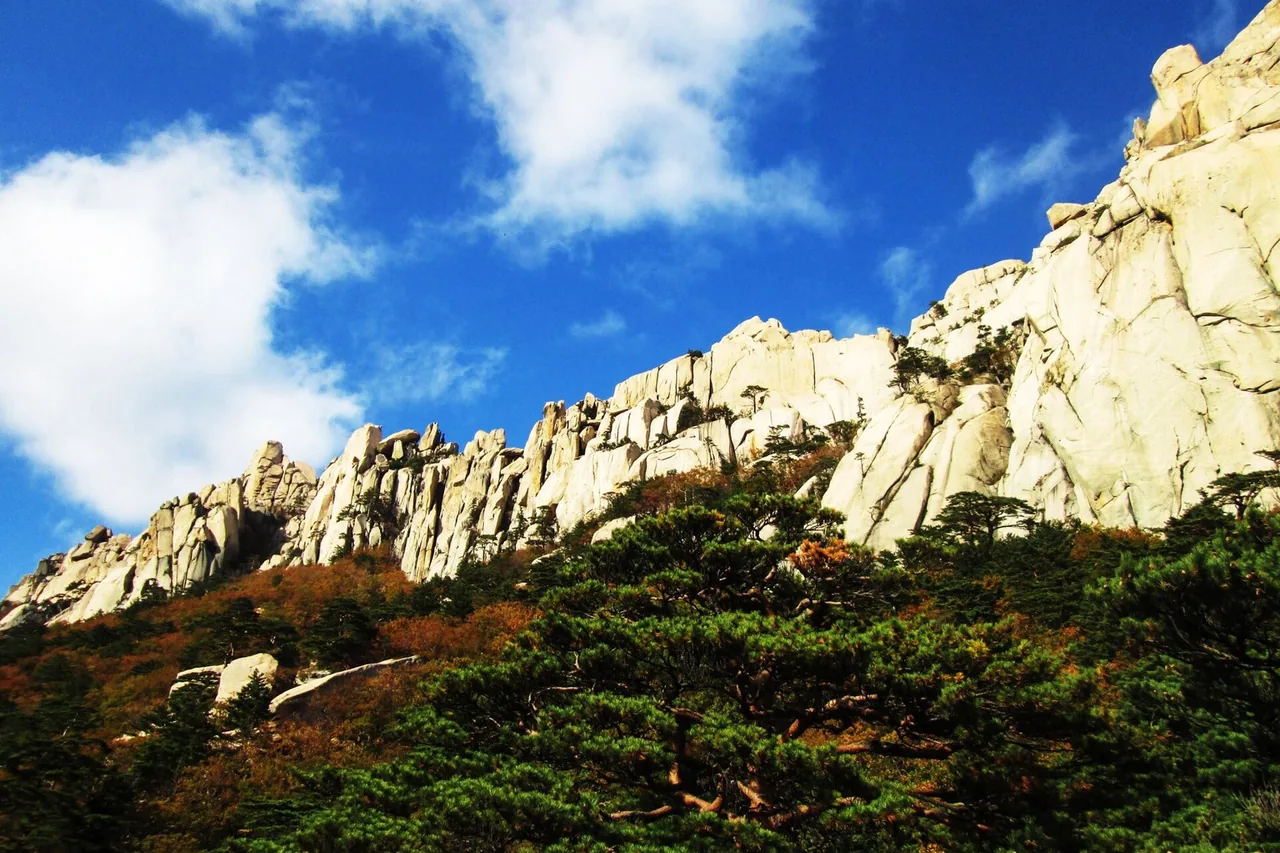
Ulsanbawi is one piece of granite, roughly 4 km around, standing clear of the slope above the Sogongwon park entrance in Outer Seorak. From below it reads as a row of six rounded towers; from the side it is one wall. Its faces, along with those at Towangseong Falls, are where rock climbing in Korea began, and they are still used. Walkers do not touch any of that; the trail goes up the back of the formation on constructed steps.
It is the best-known thing in Seoraksan National Park after the summit itself, and the reason is access. From the park entrance you are on a path immediately, the walking is easy until the last section, and the reward at the top is a straight view over the coastal plain. That combination is why it is busy.
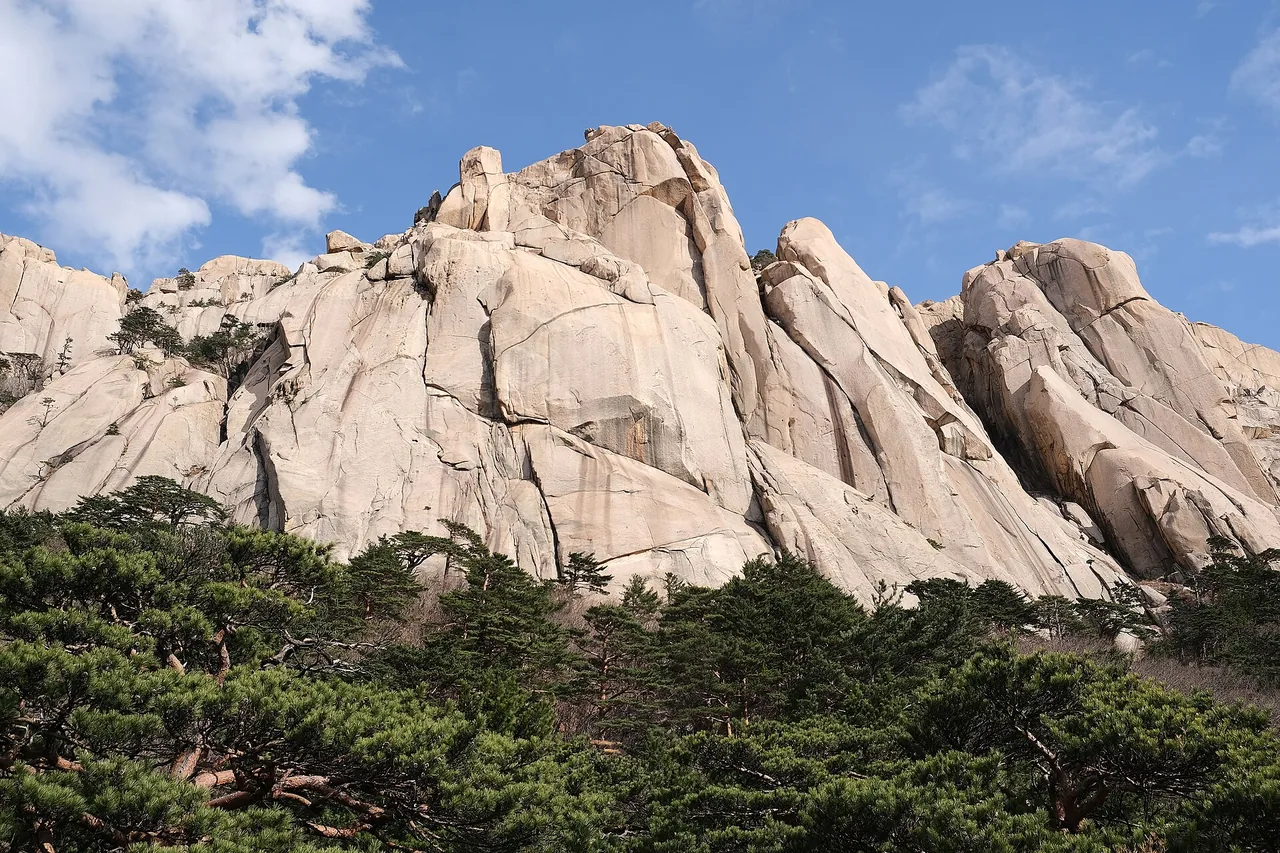
The walk starts at the Sogongwon park entrance, on the Sokcho side of Seoraksan National Park, and goes first past Sinheungsa Temple. This is the working temple at the foot of Outer Seorak; the cultural property fee that used to be charged here, 4,500 KRW, was abolished in May 2023, so there is nothing to pay. From the temple the path continues on a gentle grade to Heundeulbawi, the Rocking Rock: a boulder balanced so that a group pushing it can visibly move it without shifting it off its base. Almost everyone who walks up here stops to try.
Up to that point the walking is easy and the path is wide. The difficulty is entirely in the final section, where the trail leaves the forest and climbs a steep steel staircase fixed to the rock, up to the top of Ulsanbawi. That is the part people remember, and it is the part that decides whether this walk suits you.
No official distance, walking time or step count for the Ulsanbawi route appears in the Korea National Park Service material, so none is given here. Numbers circulating elsewhere are other people's estimates. If you need exact figures for planning, ring the Seoraksan National Park Office on +82-33-801-0900.
It is a sustained flight of open metal steps, bolted to the rock, climbing the last part of the formation. Nothing about it is technical: no scrambling, no hands on rock. Three things still make it harder than the approach walk suggests. It is steep and continuous, so it is a leg and lung job rather than a stroll. It is exposed: the steps are open, with the drop visible through and beside them, which is a real problem if you do not like heights. And it is two-way on a narrow structure, so at busy times you spend as much energy waiting and passing as climbing.
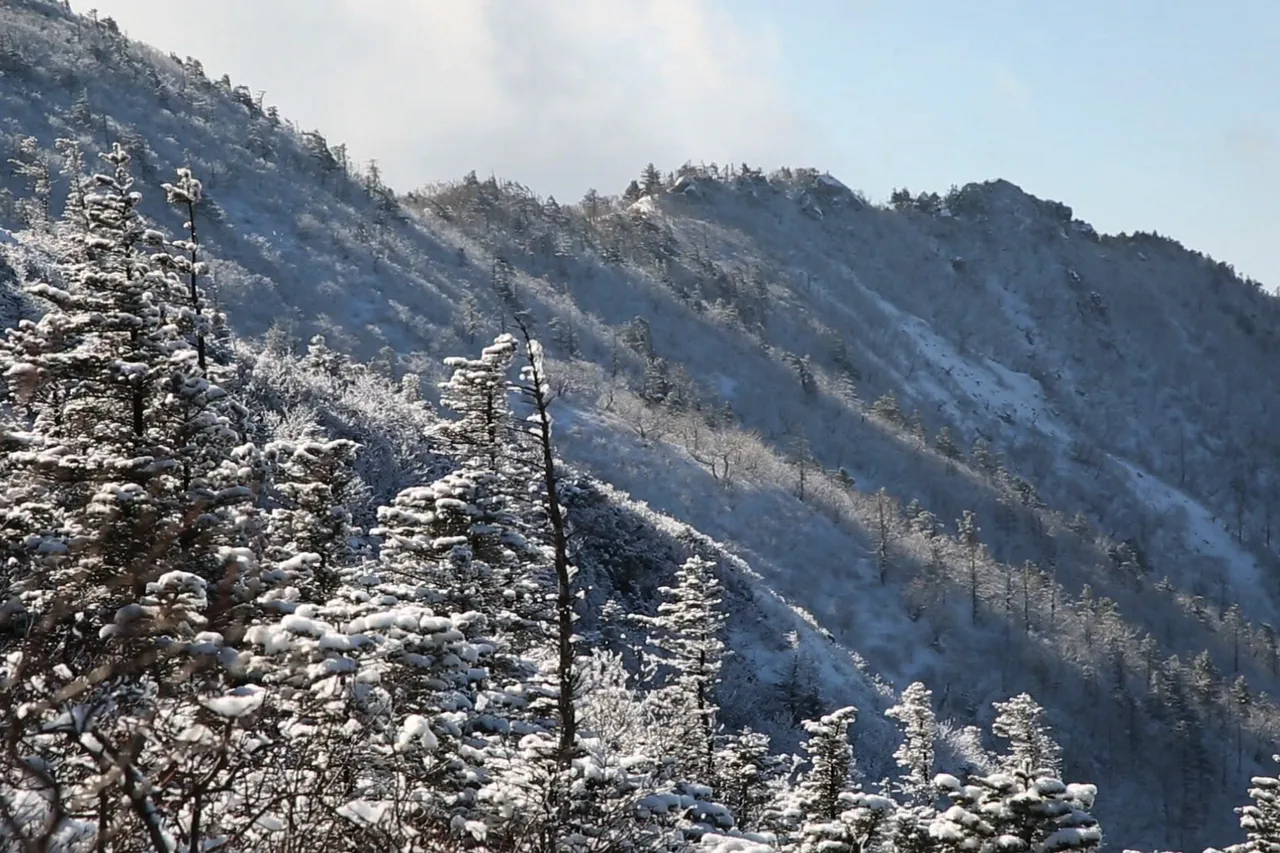
In wet weather the steps are slippery and in winter they hold ice, which is the main reason to think twice about this section outside the dry months. If the staircase does not appeal, Heundeulbawi is a satisfying turnaround point in itself, and the Gwongeumseong cable car from the same park entrance gives a high viewpoint with no climbing at all.
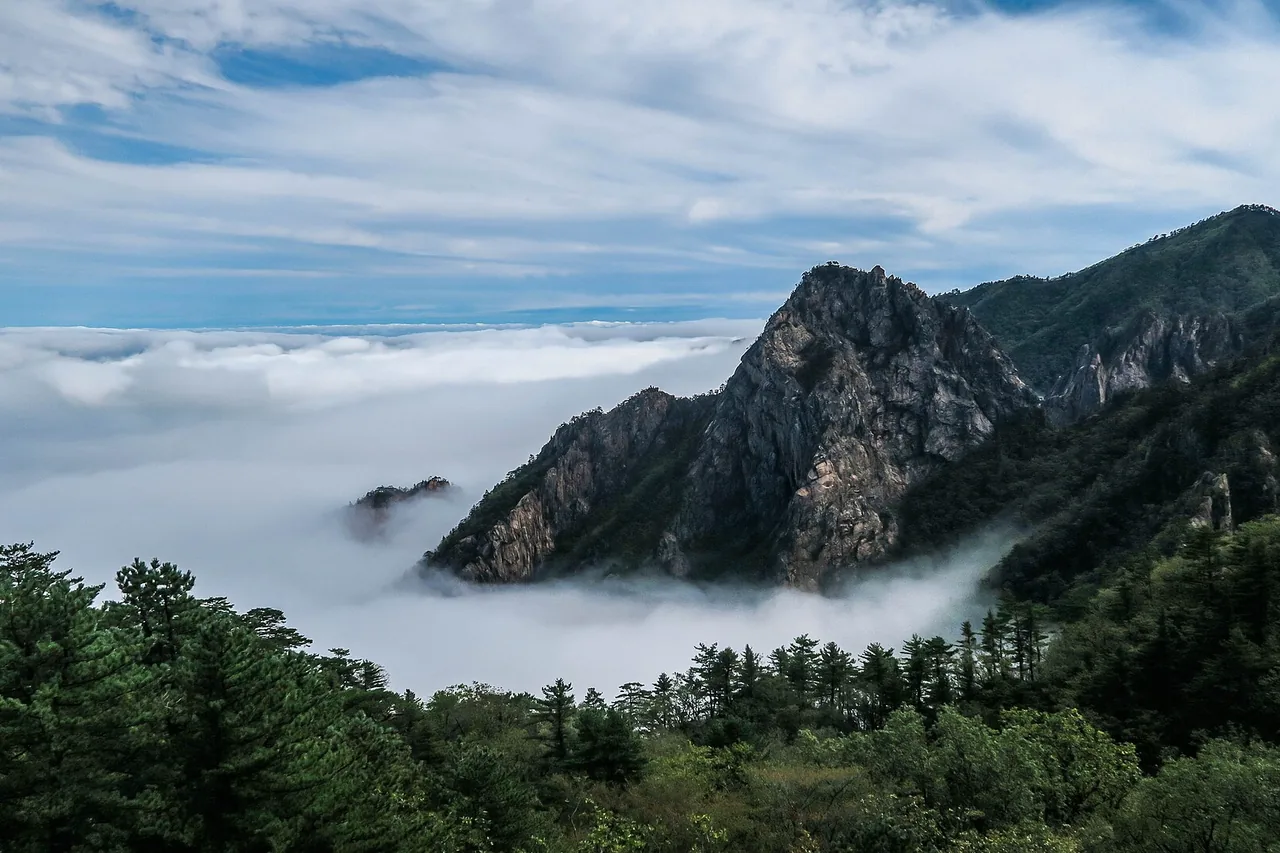
From the top of Ulsanbawi Rock the whole of Sokcho and the East Sea lie below you, with the ridges, spires and valleys of Outer Seorak behind. It is one of the few places in the park where you get the mountains and the coast in the same view, and you get it after a fraction of the effort a summit day takes. Clear mornings are best; haze on the coast builds through the day in summer.
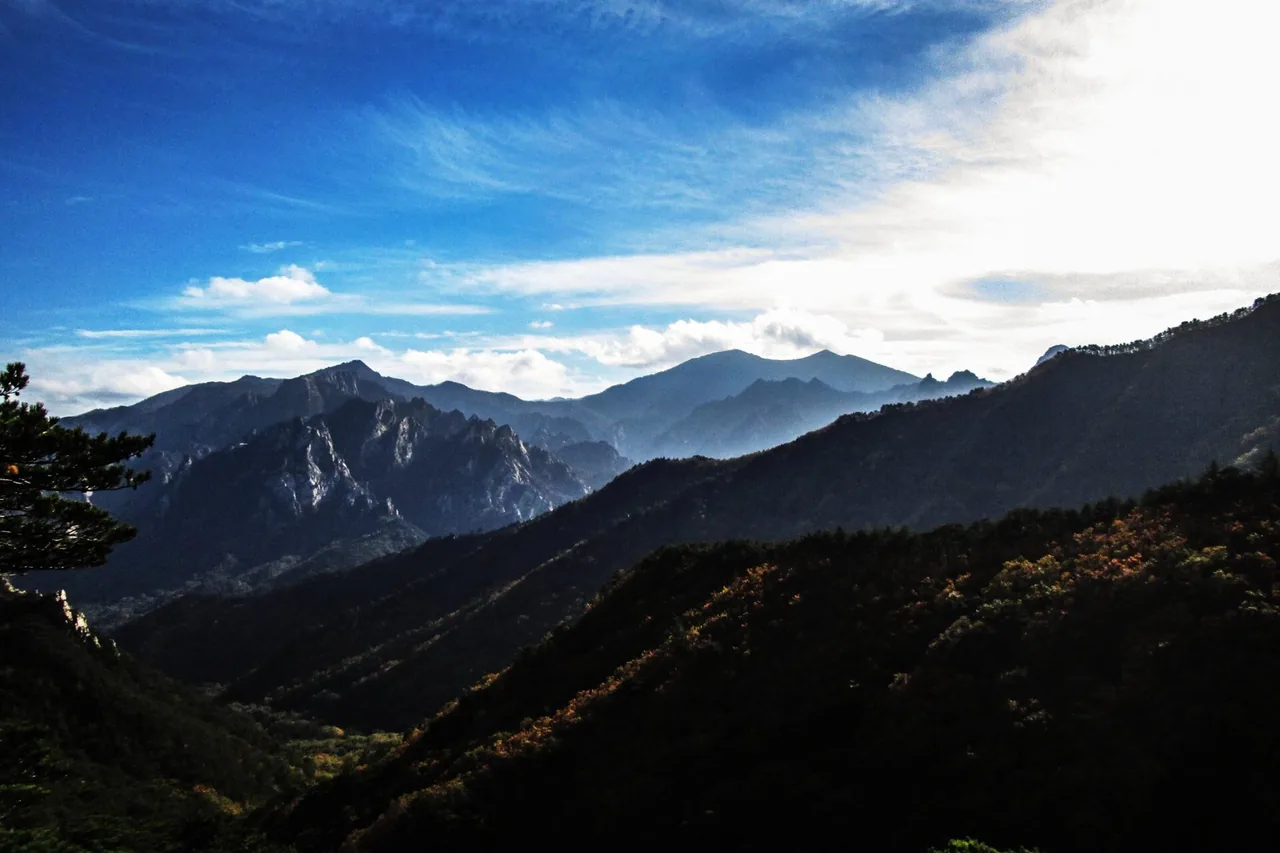
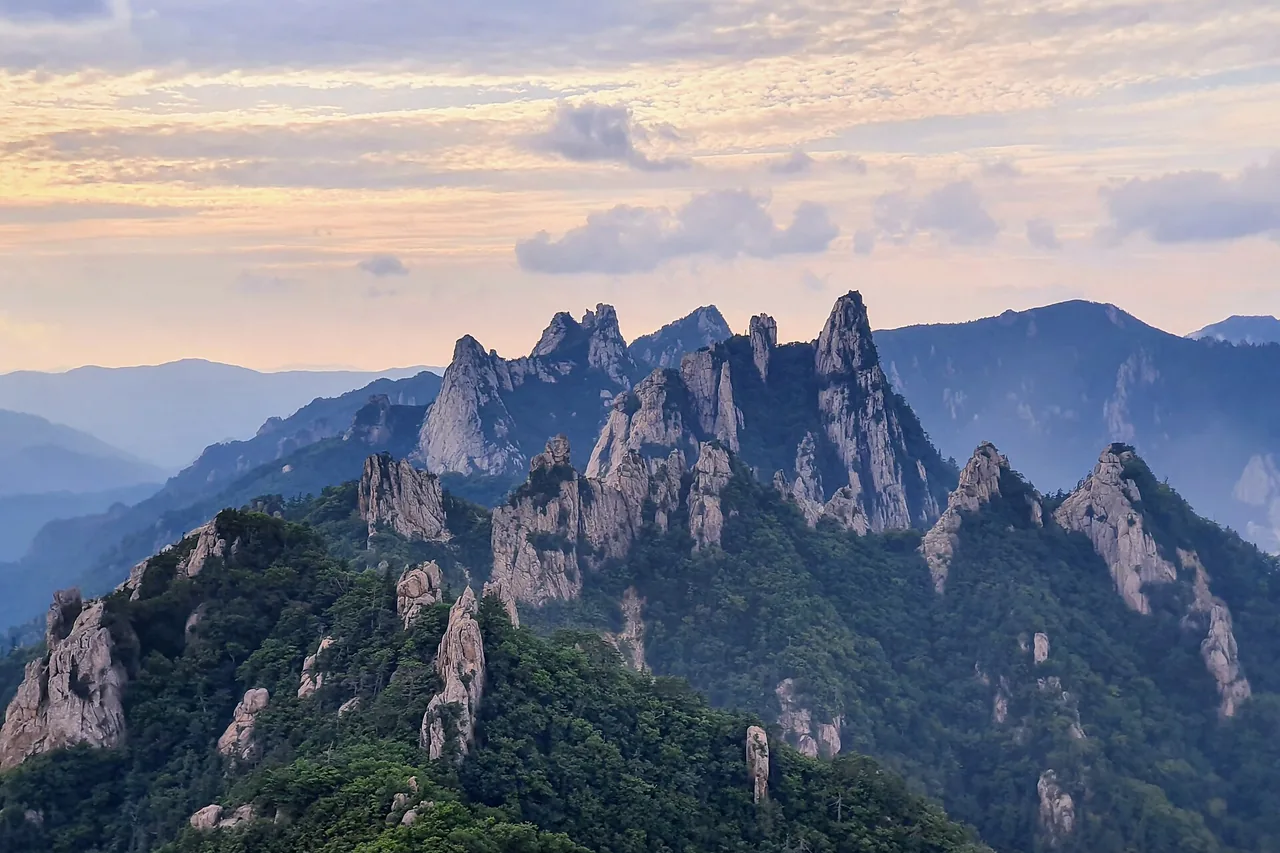
Seoraksan is normally the first mountain in South Korea to change colour, usually starting on Daecheongbong in late September and peaking in Cheonbuldong Valley in mid-October. That makes October the busiest month on any mountain in the country. The Sogongwon car park fills before dawn in the foliage season, and Ulsanbawi takes a large share of the people who arrive, because it is the short walk everyone can do.
The pinch point is the staircase, where a queue forms and does not clear. If you are coming on an October weekend, come by bus rather than by car, and start as early as you can. A weekday in the same period is a completely different walk.
Seoraksan runs an entry-time designation system, and staff turn hikers back at control posts outside the window. The published times we can confirm cover the summit routes: Osaek to Daecheongbong, 03:00–12:00 from April to October and 04:00–11:00 in winter, and Biseondae to Yangpok, 03:00–14:00 in summer. We could not confirm a published cut-off for the Ulsanbawi route in the official notices. If you are planning a late start, call the park office on +82-33-801-0900 and ask before you drive out.
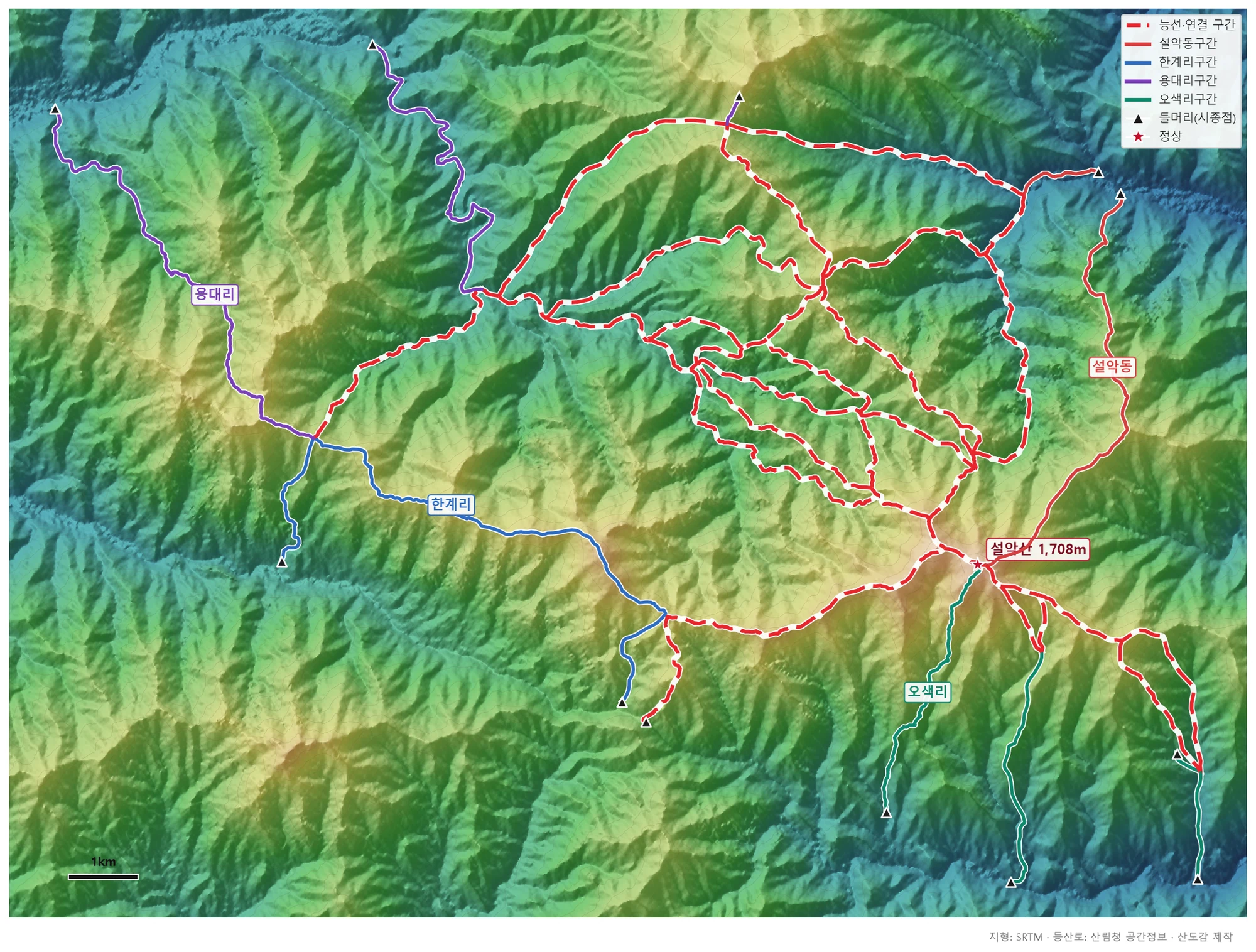
🗺 Open the full-size trail map
The base is Sokcho. Express buses run frequently from Dong Seoul Bus Terminal and the Express Bus Terminal at Gangnam in Seoul. From Sokcho, city buses #7 and #7-1 run to Seorakdong for the Sogongwon park entrance, which is where this walk starts (Korea Forest Service information). Check the timetable on the day, and note the last departure back before you start climbing.
Set navigation to Seoraksan Sogongwon, not to "Seoraksan", which will send you to whichever trailhead the app prefers, and they are a long way apart. Parking is 4,000 KRW on weekdays and 5,000 KRW at weekends and in peak season for a small vehicle. In October the car park is full before first light, so the bus is the less frustrating option.
From the same park entrance, the Gwongeumseong cable car climbs 1.128 km in about 5 minutes to Gwongeumseong Fortress at around 800 m, a viewpoint over Outer Seorak with no walking involved. It is 16,000 KRW return for adults and 12,000 KRW for children. There is no one-way ticket, no booking, and tickets are sold only on the day at the ticket office. Operating hours change daily with the weather and are posted each morning on the operator's site. Tel. +82-33-636-4300. It does not go anywhere near Daecheongbong.
For the routes to Daecheongbong Peak, Dinosaur Ridge, entry times, the trail map and GPX, see the full Seoraksan (Mount Seorak) hiking guide.
Q. Does the Ulsanbawi Rock trail reach the summit of Seoraksan?
No. Ulsanbawi Rock is a separate formation above the Sogongwon park entrance in Outer Seorak. The summit of Seoraksan is Daecheongbong at 1,708 m, and it is reached only from Osaek (5.0 km, 4 hours one way), from the park entrance up Cheonbuldong Valley (11.0 km, about 6h40) or from Hangyeryeong (8.3 km, 5h20). Ulsanbawi is a much shorter walk and is best treated as a half-day of its own.
Q. How long does the Ulsanbawi Rock trail take?
There is no official figure to give. The Korea National Park Service does not publish a distance, walking time or step count for this route in its own material, and the numbers circulating online are other people's estimates. The shape of the walk is clear enough: an easy, gentle path from the park entrance past Sinheungsa Temple to Heundeulbawi, then one steep steel staircase to the top. For exact figures, call the Seoraksan National Park Office on +82-33-801-0900.
Q. Is the Ulsanbawi staircase difficult or scary?
It is not technical, with no scrambling and nothing that needs hands on rock, but it is steep, continuous and open, with the drop visible through and beside the steps. If heights bother you, that will matter more than the effort. It is also two-way on a narrow structure, so on busy days you queue. In rain the steps are slippery and in winter they hold ice. Heundeulbawi makes a good turnaround point if you decide against the last section, and the cable car from the same park entrance gives a high view with no climbing.
Q. Do I need a reservation or a ticket for Ulsanbawi?
No. There is no reservation system for this trail and no entrance fee: park entrance fees were abolished in 2007 and the Sinheungsa Temple cultural property fee was abolished in May 2023. Reservations on Seoraksan apply only to the shelters, booked first-come at reservation.knps.or.kr, and to the Gombaeryeong section on the Jeombongsan side of the park, which is capped at 350 people a day. Your only likely cost is parking: 4,000 KRW on weekdays, 5,000 KRW at weekends and in peak season.
Q. How do I get to the Ulsanbawi trailhead without a car?
Take an express bus to Sokcho from Dong Seoul Bus Terminal or the Express Bus Terminal at Gangnam, then city bus #7 or #7-1 from Sokcho to Seorakdong for the Sogongwon park entrance, where the walk starts. In October the bus is the better option regardless, because the car park fills before dawn during the foliage season. Check the timetable on the day and note the last bus back before you start climbing.